
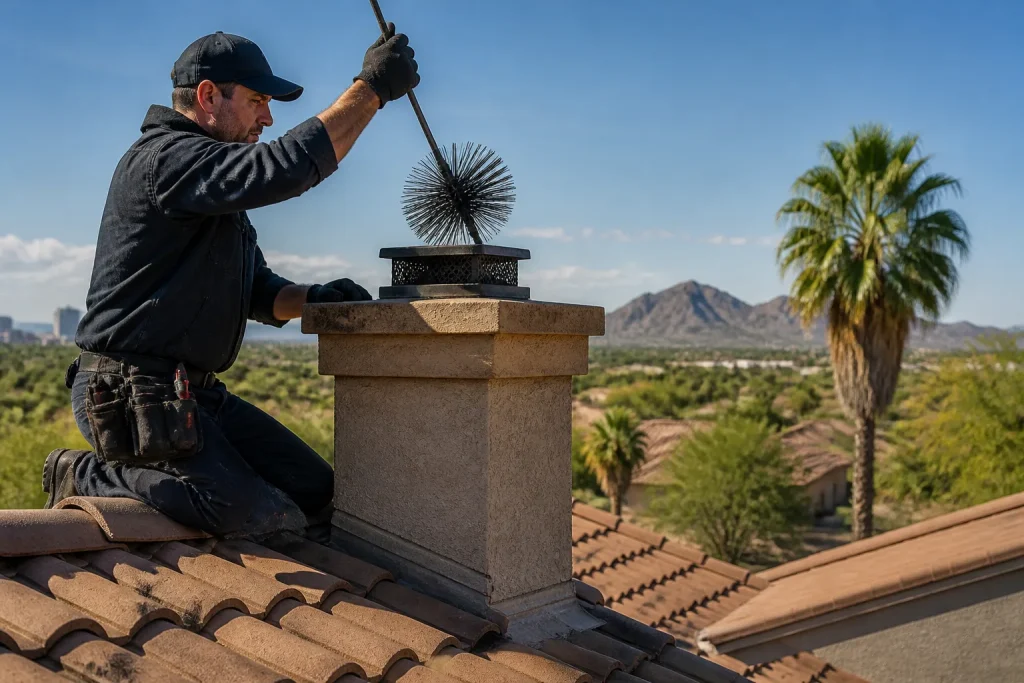
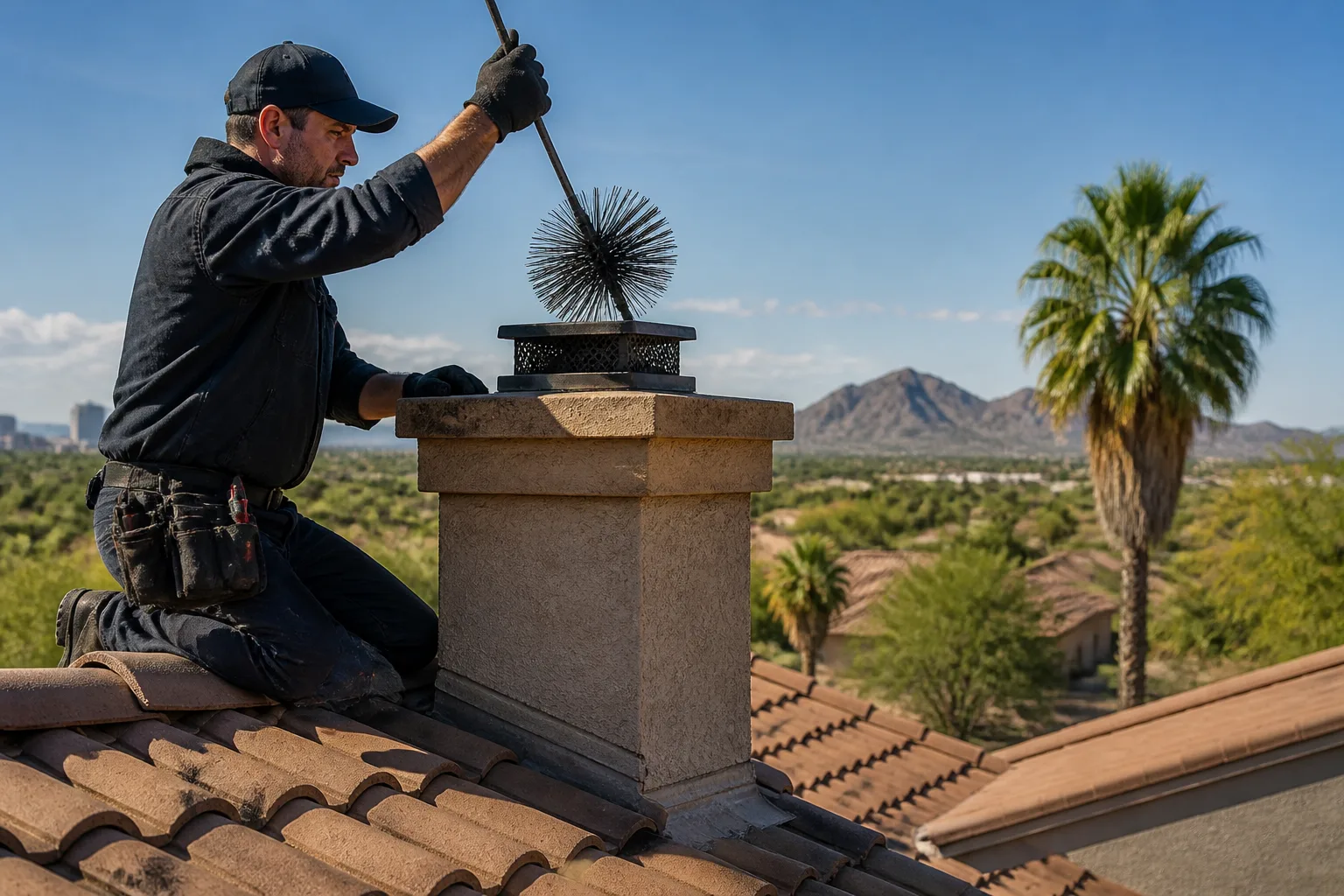
Emergency Chimney Sweep Near Me: What Tempe Homeowners Should Do First
Most chimney “emergencies” in Tempe are one of two very different things, and the right first move depends entirely on which one you’re facing. A chimney fire needs 911 immediately, before you call anyone else. Smoke rolling into the room on a cold start is a draft problem, not a structure fire, and it can wait for a technician. The mistake we see most often is homeowners treating the second scenario like the first, or worse, treating the first like the second. This guide gives you a straight decision framework so you know exactly what to do in the first five minutes.
If you’d rather have a trained eye look at it than sort it out yourself, call (866) 827-7102. We answer 24/7, and fast dispatch runs from 7am to 7pm, Sunday through Friday.
How Do I Know If It’s a Real Chimney Emergency?
The clearest signal is where the smoke and smell are coming from. If they’re inside the firebox or drifting into the room from the opening, you’re dealing with a draft or blockage problem. If they’re coming from the walls, the ceiling, or the chimney breast itself, that points to a chimney fire and you need to act immediately. Here’s how we triage the three categories we get called about in Tempe:
- Call 911 first: roaring or rumbling sound from the flue, dense smoke pouring from the chimney top, intense heat on the chimney breast or surrounding wall, or a smell of burning plastic or acrid smoke coming from the walls.
- Same-day service: an animal blockage, a completely stuck or failed damper you can’t close before storm weather, or a strong odor that shows up the first time you use the fireplace for the season.
- Next-day scheduling: smoke spillage on startup that clears once the flue warms, a weak draft, or a sooty smell that lingers after the fire is out. These are worth fixing but usually aren’t emergencies.
The category matters because it determines who you call and in what order. Getting that sequence right is the whole game.
What Are the Signs of an Active Chimney Fire?
An active chimney fire has a specific signature, and it’s worth knowing before you ever need it. Listen for a low roaring or cracking sound that seems to come from inside the chimney rather than the firebox. Look for thick, dark smoke or a shower of sparks at the top of the chimney. Touch the chimney breast or the wall around it carefully with the back of your hand; if it’s hot to the touch, that’s a fire inside the flue.
You may also see puffy, honeycombed creosote at the top of the firebox after the fact, or notice discoloration on the chimney cap. Creosote builds in stages, and the hardened, glazed stage is the one that fuels chimney fires. That’s a big reason we inspect before we sweep: a cleaning alone can’t tell you how deep the buildup sits in the flue. If your goal is to catch that before it becomes an emergency, a routine chimney sweep is the place to start.
When you’re certain it’s a chimney fire, the sequence is simple: get everyone out of the house, call 911, and don’t try to fight it yourself. Do not pour water into the firebox. The sudden temperature change can crack masonry and send scalding steam back at you. Do not close the damper either; it can trap heat and smoke in the flue.
What Should I Do Right Now While I Wait for Help?
For a true emergency: evacuate, call 911, and stay out until they clear you. For everything else, these steps keep things safe in the short window before a technician arrives.
- Stop using the fireplace. Put out any fire, let it cool, and don’t light another until someone has looked at it.
- Close off the fireplace. If you have glass doors, close them. If you don’t, tape a sheet of heavy plastic over the opening to stop smoke and odors from drifting into the room.
- Gather documentation. Note when the problem started, what you smelled or heard, and whether it happened during or after a fire. Take a few photos of the firebox, the damper, and the chimney cap if you can see it safely. Photograph any interior staining on walls or ceilings.
- Check your carbon monoxide detector. If it alarms or you feel dizzy, nauseated, or headachy, get everyone outside and call 911. Those are signs of a potentially blocked flue, not just a smoky one.
Having those notes and photos ready helps a technician diagnose faster and quote accurately, whether that’s for a cleaning or a chimney repair.
Why Is an Animal Blockage So Common in Tempe?
Bird nests and animal blockages are one of the most common calls we get here in the warm months. Starlings, roof rats, and squirrels all find an uncapped chimney to be a convenient, sheltered space to build a nest or raise a litter. From their point of view, your chimney is just a very nice garage with a view of the sky.
When a blockage sets in, the symptoms are hard to miss. You’ll get smoke pushing back into the room, a draft that won’t draw no matter what you do, or the sound of scratching above the damper. Here’s what not to do: never try to “chase it out” by lighting a fire. Running a fire underneath a nest is a fire hazard and can push smoke and fumes into the house. A properly fitted chimney cap is the real solution, and it’s one of the most reliable ways to keep this from happening again. That’s why we specify caps and covers from brands like Gelco and Olympia Chimney rather than generic hardware-store parts; they’re built for the application.
If you have an uncapped flue in Tempe, it’s a good idea to get one fitted before warm weather sets in.
When Should You Call a Pro vs. Handle It Yourself?
You can safely handle the immediate shutdown: stop using the fireplace, close it off, and gather your notes. What you should not do yourself is inspect the flue, clean out a nest near the damper, or assess a cracked liner. Those jobs involve heights, confined spaces, and components you can’t see from the firebox, and getting them wrong can turn a manageable problem into a dangerous one. That’s the short answer, and it’s the one worth heeding.
We handle sweeping, inspection, and repair under one roof, so a problem that turns up during a cleaning doesn’t mean calling a second company. Our technicians have up to 9 years of experience, and we work with professional-grade components from DuraFlex, HeatShield, Gelco, Olympia Chimney, Famco, and Copperfield. If a sweep uncovers a cracked or deteriorating flue, we can often restore it with HeatShield resurfacing instead of a full liner replacement. Where a liner is needed, DuraFlex flexible liner systems are what we reach for. You get a documented assessment of what’s safe, what needs repair now, and what can simply be watched.
What Does an “Emergency Chimney Sweep” Actually Cover?
An emergency sweep visit is mostly about stopping the immediate problem: clearing a blockage, removing a nest, and confirming the flue is safe to use again. That’s one job. Anything structural the technician finds during that visit, like a cracked liner or failed damper, is a separate repair quoted afterward. Clearing the blockage doesn’t fix a compromised liner, and it’s important to know that going in.
We work from camera evidence so you can see exactly what we see before agreeing to any repair, and we’ll say plainly when work can safely wait. If you need help sorting out whether your situation is urgent, call (866) 827-7102 for a free estimate and we’ll walk you through it.
Related services in Tempe: Tempe Chimney Sweep for our full service overview.
The Bottom Line
Chimney fires are an emergency and need 911 first, full stop. Animal blockages and a stuck damper are worth same-day attention. Smoke spillage, weak draft, and lingering odor can wait for next-day scheduling. Knowing which category you’re in is the whole framework. If you’re not sure, a professional assessment settles it quickly and safely, and we can check, clean, and repair in one relationship. If you’re in Tempe and need help, Tempe Chimney Sweep offers free estimates. Call (866) 827-7102. We answer 24/7, with fast dispatch from 7am to 7pm, Sunday through Friday.
Frequently Asked Questions
Get everyone out of the house and call 911. Smoke or a burning plastic smell coming from the walls rather than the firebox is a chimney fire scenario. Don’t pour water into the firebox and don’t close the damper; both can make it worse. Stay outside until the fire department clears you.
Usually not. Smoke rolling into the room on a cold start is typically a draft problem, and it can safely be scheduled for the next available visit. Stop using the fireplace, close it off, and call (866) 827-7102 for a free estimate so we can take a look.
No, and it’s dangerous. Lighting a fire under a nest can ignite it and push smoke and fumes into your home. Keep the fireplace off, close it off, and have a technician clear the blockage and fit a proper cap. Call (866) 827-7102 to book it.
Not always. A visit clears blockages and cleans the flue, and if the technician finds a cracked liner or failed component, that becomes a separate quoted repair. We show you the camera evidence so you can decide with real information. Call (866) 827-7102 for an estimate.
Written by the team at Tempe Chimney Sweep.
Need Chimney Cleaning Help?
Call Tempe Chimney Sweep - licensed & insured, with free written estimates in Tempe.
(866) 827-7102